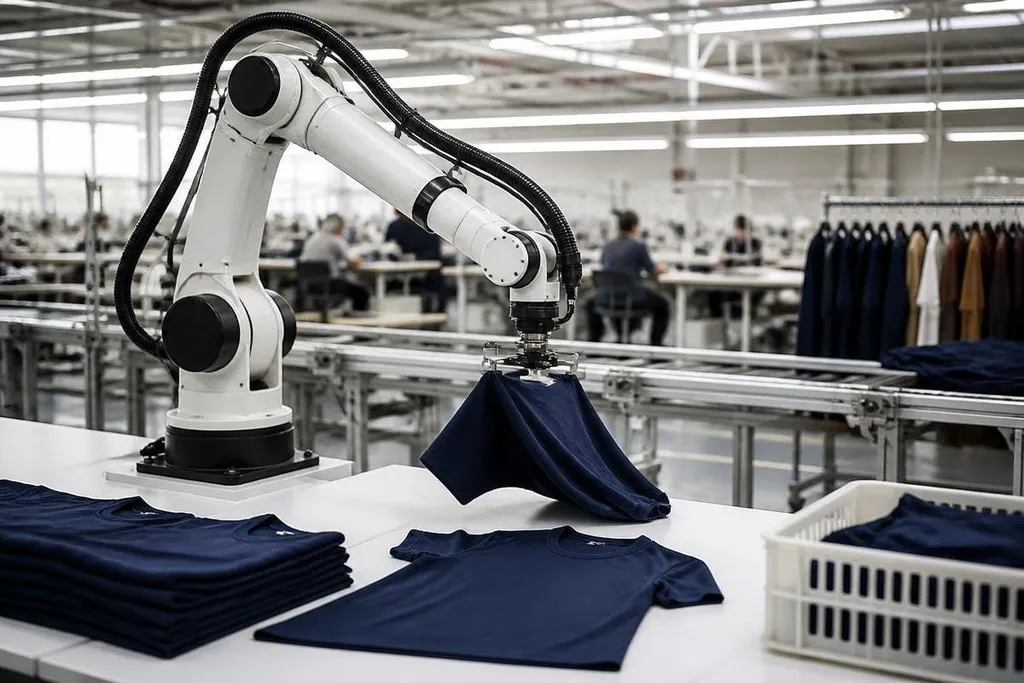
A clothing factory asks robots to do something harder than lifting a rigid box: move fabric that bends, folds, slips, and changes shape. Automation is taking hold first where the material stays controlled, such as fabric cutting, inspection, packing, and movement between workstations.
For a production manager, the useful question is practical: which tasks can a robot repeat without slowing people down or damaging the garment?
- Robots cut fabric from digital patterns with fixed tool paths.
- Cameras check seams, stains, holes, and misplaced labels.
- Soft materials still make sewing and garment handling difficult.
Where robots fit first
Fabric cutting gives automation a clear starting point. A computer-controlled cutter can follow a stored pattern across layers of cloth, while software keeps each piece matched to the planned size and shape. The factory still needs people to load material, check the stack, and deal with cloth that shifts during cutting.
Inspection is another suitable task. Cameras can scan panels or finished garments for visible faults, then send images to software that marks areas for review. This helps place the same check at several points in production, though the system needs good lighting and examples of real defects.
Robotic arms can also move bins, cut panels, hang garments, and place finished items into packaging. These jobs use grippers, suction tools, or clamps matched to the material. A tool that works on a folded cotton panel may crease silk or pull a loose thread from a knitted garment.
Why fabric is difficult
A metal part keeps its shape when a robot moves it. Fabric does not. The robot has to deal with stretch, wrinkles, changing thickness, and edges that may be hard for a camera to see.
That difference affects sewing most. A sewing robot must keep the fabric flat, guide two layers at the correct speed, and respond when the material shifts near the needle. Small errors can change the seam line or leave extra cloth under the presser foot.
Machine vision helps by locating edges, seams, and marks before the robot moves. Force sensors can also measure contact, so the arm knows when a gripper is pulling too hard. These tools reduce errors, but they don't remove the need for setup, calibration, and human checks.
What changes on the factory floor
Fashion robots usually change a work cell before they change an entire factory. A worker may load pieces, monitor the machine, remove finished parts, or fix cases the robot cannot classify. That shifts the job toward machine setup, inspection, material handling, and fault recovery.
The gain comes when the same task repeats for long production runs. A robot can keep moving panels or checking labels while staff handle fabric changes and exceptions. Short runs with many styles can be harder because each new garment needs different tools, positions, software settings, and checks.
A clothing maker comparing automation needs the task, run length, changeover time, and staff role recorded together. Robot24.com can place those facts beside the machine before the next section tests what remains unproven.
What remains unproven
A robot that handles one fabric and one garment design may struggle when the order changes. A factory also has to count tool changes, training, maintenance, floor space, and rejected parts beside the robot's purchase price.
The strongest claims need a task, a material, and a measured result. A video of an arm folding a shirt shows that the motion is possible. It does not show how the system performs across a full shift, several fabric types, or garments with different sizes.
I’d judge a fashion robot by its recovery rate, not by a clean demonstration. The useful system is the one that tells a worker when fabric has moved and returns to work without damaging the next piece.
A practical buying checklist
Before adding a robot to a clothing line, check these points:
- Name one repeated task, such as panel transfer or label inspection.
- Test the full material range, including thin, stretchy, and folded fabric.
- Record how often a person must correct the robot during a normal run.
- Check whether the tool can change when the garment design changes.
- Include lighting, safety guarding, software, service, and training in the cost.
- Set a clear result for speed, defect detection, or reduced handling.
The next useful step is a controlled trial beside the existing workstation.
If the robot handles one narrow task with few corrections across several garment runs, the factory has a sound basis for a wider rollout; if it needs constant help, the process needs more work before the machine earns its floor space.